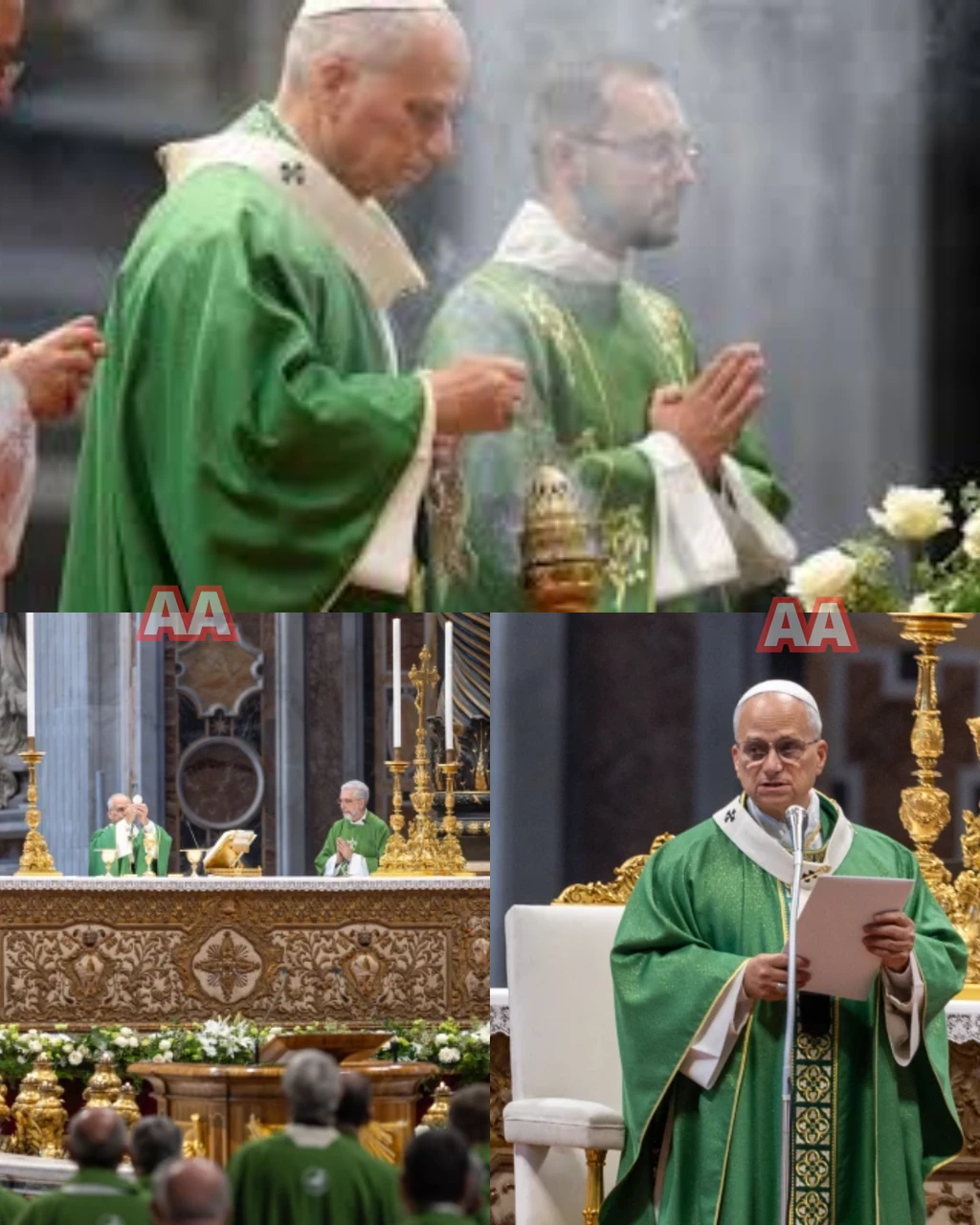
CONFESSIONE SHOCK SCATENATA! 😱 Papa Leone ha appena rilasciato una confessione agghiacciante sulla guerra interna più profonda della Chiesa: la tensione proibita tra Tradizione e Novità. La definisce una bomba a orologeria che NON DEVE trasformarsi in “polarizzazioni dannose.” Questa non è solo teologia; è una linea di battaglia ribelle tracciata attraverso i secoli! Il colpo di scena sconvolgente? Questa quieta lotta interna detiene la chiave segreta per la sopravvivenza o il crollo dell’intera fede. Ma il pericolo nascosto che ha indicato subito dopo… ti farà mettere in discussione da che parte stai davvero combattendo. 🔥 Tocca per SVELARE il piano di battaglia.
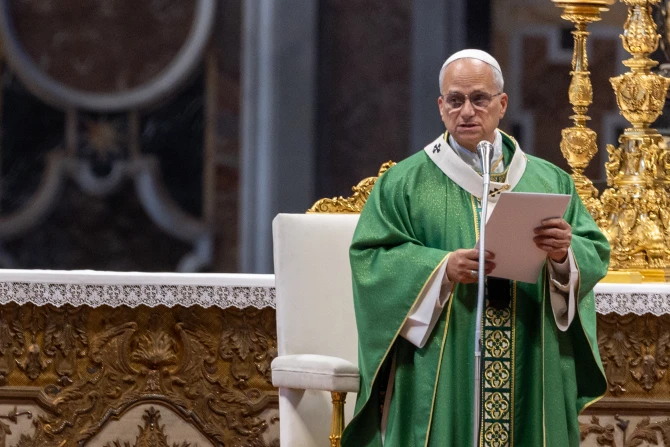
Pope Leo XIV celebrates Mass in St. Peter’s Basilica for the Jubilee of Synodal Teams and Participatory Bodies on the
Vatican City, Oct 26, 2025 / 08:10 am
Pope Leo XIV said at a Mass on Sunday that no one in the Church “should impose his or her own ideas” and asked that tensions between tradition and novelty not become “ideological contrapositions and harmful polarizations.”
“The supreme rule in the Church is love. No one is called to dominate; all are called to serve,” Leo said in St. Peter’s Basilica on Oct. 26.
“No one should impose his or her own ideas; we must all listen to one another,” he continued. “No one is excluded; we are all called to participate.
No one possesses the whole truth; we must all humbly seek it and seek it together.”
The pontiff celebrated Mass on the 30th Sunday in Ordinary Time for the closing of the Jubilee of Synodal Teams and Participatory Bodies, part of the Church’s wider Jubilee of Hope in 2025.
In a call for communion, Pope Leo addressed all the participants in the synodality meeting and asked for their help to expand “the ecclesial space” and make it “collegial and welcoming.”
Leo also spoke about synodality with the jubilee pilgrims during an Oct. 24 event at the Vatican.
The Holy Spirit transforms ‘harmful polarizations’
“Being a synodal Church means recognizing that truth is not possessed but sought together, allowing ourselves to be guided by a restless heart in love with Love,” he emphasized.
The pontiff called on Christians to live “with confidence and a new spirit amid the tensions that run through the life of the Church: between unity and diversity, tradition and novelty, authority and participation.
We must allow the Spirit to transform them, so that they do not become ideological contrapositions and harmful polarizations.”
It is not a question of resolving these tensions “by reducing one to the other, but of allowing them to be purified by the Spirit, so that they may be harmonized and oriented toward a common discernment,” he said.
He also made it clear that, “prior to any difference, we are called in the Church to walk together in the pursuit of God, clothing ourselves with the sentiments of Christ.”
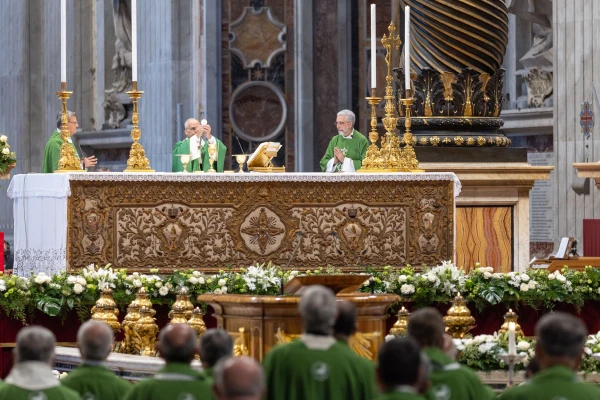
Pope Leo XIV celebrates Mass in St. Peter’s Basilica on Oct. 26, 2025. Credit: Daniel Ibanez/CNAResolving tensions in the Church
In his homily on the day’s Gospel passage, the parable of the pharisee and the tax collector, the pope warned of the danger of spiritual pride displayed by the pharisee: “The pharisee is obsessed with his own ego, and in this way, ends up focused on himself without having a relationship with either God or others.”
Leo pointed out that this can also occur in the Christian community.
For example, “when the ego prevails over the collective, causing an individualism that prevents authentic and fraternal relationships,” he said.
Subscribe to our daily newsletter
He also criticized “the claim to be better than others, as the pharisee does with the tax collector, [because it] creates division and turns the community into a judgmental and exclusionary place; and when one leverages one’s role to exert power rather than to serve.”
The pope highlighted the tax collector’s humility as an example for the entire Christian community:
“We too must recognize within the Church that we are all in need of God and of one another, which leads us to practice reciprocal love, listen to each other, and enjoy walking together.”
Leo urged Catholics to dream of and build a more humble Church, capable of reflecting the Gospel in its way of living and relating.
“A Church that does not stand upright like the pharisee, triumphant and inflated with pride, but bends down to wash the feet of humanity;
a Church that does not judge like the pharisee does the tax collector but becomes a welcoming place for all,” he said.
He also invited the entire ecclesial community to commit itself to building a Church that is “entirely synodal, ministerial, and attracted to Christ,” dedicated to serving the world and open to listening to God and to all the men and women of our time.
Angelus
After the Mass on Oct. 26, Pope Leo led the Angelus prayer in Latin from a window of the Apostolic Palace, which overlooks St. Peter’s Square.
In his message following the Marian prayer, he expressed his closeness to the people of eastern Mexico, who were hit earlier this month by devastating floods and landslides, leaving 72 dead and dozens still missing.
“I pray for the families and for all those who are suffering as a result of this calamity, and I entrust the souls of the deceased to the Lord, through the intercession of the Blessed Virgin,” the pope said.
Leo also renewed his call to “unceasingly” pray for peace, especially through the communal recitation of the rosary.
“Contemplating the mysteries of Christ together with the Virgin Mary, we make our own the suffering and hope of children, mothers, fathers, and elderly people who are victims of war,” he said.
“And from this intercession of the heart arise many gestures of evangelical charity, of concrete closeness, of solidarity.
To all those who, every day, with confident perseverance carry on this commitment, I repeat: ‘Blessed are the peacemakers!’”
News
“MELONI SI COMMUOVE DOPO BELPIETRO: IL CASO ZUNCHEDDU RIAPRE LA GUERRA SULLA GIUSTIZIA—GARANZIE O VENDETTA POLITICA? TRA TOGHE, GOVERNO E OPINIONE PUBBLICA, UNA STORIA DI INNOCENZA DIVENTA ARMA ELETTORALE È un frame che resta addosso: Maurizio Belpietro alza il tono, parla di Beniamino Zuncheddu e dell’ingiusta detenzione che ha sconvolto l’Italia, e Giorgia Meloni—secondo quanto riportato—si dice “molto colpita”, fino a lasciar trapelare emozione. Il tema, però, non è solo umano: è dinamite istituzionale. Perché il caso Zuncheddu diventa subito il simbolo di una battaglia più grande: riforma della giustizia, carcerazione preventiva, responsabilità, fiducia nello Stato. C’è chi vede un dovere morale di cambiare le regole; c’è chi teme una narrazione usata per mettere all’angolo la magistratura. Retroscena: secondo indiscrezioni, a quanto risulta dopo l’intervento sarebbe partita una raffica di telefonate tra staff e parlamentari per trasformare lo choc in agenda—senza prove, ma con una sensazione netta: qualcuno vuole che questa storia diventi “la prova” definitiva. Parole chiave: Meloni, Belpietro, caso Zuncheddu, giustizia, riforma.
Trentatré anni. Da innocente. Una frase che non ha bisogno di aggettivi. Che non ha bisogno di commenti. Che cade nell’aula come una pietra in un pozzo — e il rumore che fa, rimbalzando sulle pareti, è il rumore di…
“PORRO INTERVISTA MELONI SULLA RIFORMA DELLA GIUSTIZIA: “SEPARAZIONE DELLE CARRIERE” O CONTROLLO DEL POTERE? IN TV SI APRE UNA FRATTURA TRA TOGHE, GOVERNO E OPPOSIZIONI—E QUALCUNO PARLA DI UNA NOTTE DI TELEFONATE NERVOSISSIME Studio lucido, domande secche: Nicola Porro incalza Giorgia Meloni a Quarta Repubblica e il tema diventa subito esplosivo—riforma della giustizia, referendum, e soprattutto la “separazione delle carriere”. Meloni la presenta come svolta di garanzia e chiarezza istituzionale; i critici la leggono come terreno scivoloso, dove la fiducia nello Stato rischia di dividersi in due tifoserie. Il punto caldo è il non detto: cambiano gli equilibri tra magistratura e politica, o cambia solo la narrativa? Secondo indiscrezioni, a quanto risulta sarebbe circolata una scaletta “blindata” e, nella notte prima, ci sarebbe stata una chiamata tra staff per evitare “trappole” su CSM e tempi della riforma—nulla di provato, ma l’atmosfera lo suggerisce. Parole chiave: Porro, Meloni, giustizia, separazione delle carriere, referendum.
“Ci state togliendo un potere di condizionamento al quale non vogliamo rinunciare.” Una frase pronunciata da Giorgia Meloni con la calma di chi ha già vinto l’argomento prima ancora di finire la frase. Con la precisione di chi sa che…
“DEL DEBBIO ACCENDE LA SALA E MELONI SI COMMUOVE: APPLAUSI, SILENZI E UNA FRASE CHE DIVIDE L’ITALIA TRA “POPOLO” E “PROPAGANDA”—IN DIRETTA (O QUASI) IL CONFINE TRA TV E POTERE SI FA PERICOLOSAMENTE SOTTILE È una scena da cinema politico: Paolo Del Debbio prende il microfono, la platea esplode, e Giorgia Meloni—secondo le immagini circolate—si sarebbe commossa. Non è solo un momento emotivo: è un test di forza sul racconto pubblico, dove ogni parola pesa come un voto. Da una parte c’è chi legge l’intervento come “voce del Paese”, dall’altra chi parla di spettacolarizzazione e di giornalismo troppo vicino al potere (critiche che rimbalzano anche sui social). Il punto non detto, ma centrale: chi sta guidando la conversazione—la politica o la televisione? Secondo indiscrezioni, a quanto risulta lo staff avrebbe curato tempi e inquadrature per evitare domande “a imboscata” e massimizzare l’impatto emotivo, senza che questo provi nulla oltre la strategia comunicativa. Parole chiave: Del Debbio, Meloni, Dritto e Rovescio, Mediaset, platea.
“L’imparzialità non è una questione inventata dalla giurisprudenza. È una questione che attiene la nostra natura.” Una frase pronunciata sotto le luci di uno studio televisivo. Con una platea che esplodeva. Con la telecamera che cercava il volto della premier…
“FEDEZ “APRE LE PORTE” A MELONI: IL PULP PODCAST DIVENTA CAMPO DI BATTAGLIA TRA POTERE E POP—REFERENDUM, POLITICA ESTERA E ASSENZE PESANTI (SCHLEIN, CONTE): CHI PARLA AL PAESE E CHI RESTA FUORI DALLA STANZA? Telecamera fissa, tono da confessionale, ma la posta è politica. Giorgia Meloni è ospite del Pulp Podcast di Fedez: un incontro che mescola linguaggio pop e Palazzo, con domande su referendum e scelte di governo, fino al nodo della politica estera e del rapporto con gli USA—tema che, secondo le anticipazioni, arriva sul tavolo senza filtri. Nel retroscena più rumoroso non c’è solo ciò che la premier dice, ma chi non c’è: viene riportato che Elly Schlein avrebbe declinato l’invito e che da Giuseppe Conte non sarebbe arrivata risposta. E così l’intervista diventa uno specchio: dialogo diretto con un pubblico nuovo o operazione di immagine? A quanto risulta, la strategia è semplice e feroce: portare la battaglia culturale fuori dai talk show, dove un rapper può fare le domande che l’Aula evita. Parole chiave: Fedez, Meloni, Pulp Podcast, referendum, politica estera.
“Non si vota sulla Meloni. Si vota sulla giustizia.” Una frase pronunciata in uno studio che non assomiglia a nessuna sala stampa di Palazzo Chigi. Nessun podio istituzionale. Nessuna bandiera italiana sullo sfondo. Solo una telecamera fissa, due microfoni, e…
“MATONE “INARRESTABILE” CONTRO SCHLEIN: IN AULA VOLANO ACCUSE SULLA GIUSTIZIA, E DIETRO LE QUINTE SI APRE UNA GUERRA DI FIDUCIA TRA TOGHE, GOVERNO E PD—CHI DIFENDE I VALORI DELLO STATO E CHI RISCHIA DI PERDERLI? Luci fredde, microfoni accesi: Simonetta Matone alza il tiro e punta dritto su Elly Schlein. Il bersaglio è la riforma della giustizia—e soprattutto la frase-chiave che incendia tutto: “PM sotto l’esecutivo?”. Matone parla di “affermazioni gravissime” e sfida l’opposizione a indicare dove, nei testi e nelle intenzioni, starebbe questo rischio. La tensione cresce, i banchi rumoreggiano, e la Camera diventa un ring di parole. Il conflitto centrale è chiaro: sicurezza istituzionale vs allarme democratico. Secondo indiscrezioni, a quanto risulta nei corridoi si starebbe già preparando la clip “definitiva” per i social, mentre nel PD qualcuno teme un boomerang comunicativo. E c’è un dettaglio che rimbalza sottovoce—una telefonata notturna tra staff, “tenete la linea, domani si va all-in”. Parole chiave: Matone, Schlein, giustizia, PM, Parlamento.
“Elly, per favore, mi indichi qual è il punto specifico delle norme nel quale è scritta questa cosa.” Una frase pronunciata con la calma di chi ha passato quarantuno anni in magistratura. Con la precisione di chi sa che la…
“LA RUSSA NELLA BUFERA: LO SCONTRO CON LA MAGISTRATURA DIVENTA GUERRA DI NARRAZIONI SUL REFERENDUM—TRA GRATTERI, NORDIO E OPPOSIZIONI, IL QUIRINALE DELLA FIDUCIA VACILLA: CHI DIFENDE LO STATO E CHI “FA PROPAGANDA”? A Roma basta una frase per far tremare i palazzi. Ignazio La Russa finisce al centro della tempesta dopo l’ennesimo botta e risposta sulla giustizia: da un lato l’accusa che certi toni “offendano” e alzino lo scontro con la magistratura, dall’altro la replica che la destra “non è mangia-magistrati”. Intanto Nordio rilancia il tema delle riforme e la discussione si incolla al referendum sulla separazione delle carriere. L’opposizione (Pd in testa) denuncia una “scelta politica” e chiede di abbassare i toni: è qui che nasce la frattura centrale—riforma o delegittimazione? Secondo indiscrezioni, a quanto risulta circolerebbero appunti riservati e una telefonata notturna tra staff per “blindare la linea” prima dell’Aula. Nulla di provato, ma il sospetto avvelena l’aria. Parole chiave: La Russa, magistratura, Nordio, Gratteri, separazione delle carriere.
Mentre lei chiudeva gli scatoloni nel suo ufficio dell’Aquila, sorvegliata da agenti armati, i portoni dorati di Palazzo Madama si aprivano per qualcun altro. Non per lei. Non per il giudice che aveva applicato la legge. Non per la magistrata…
End of content
No more pages to load