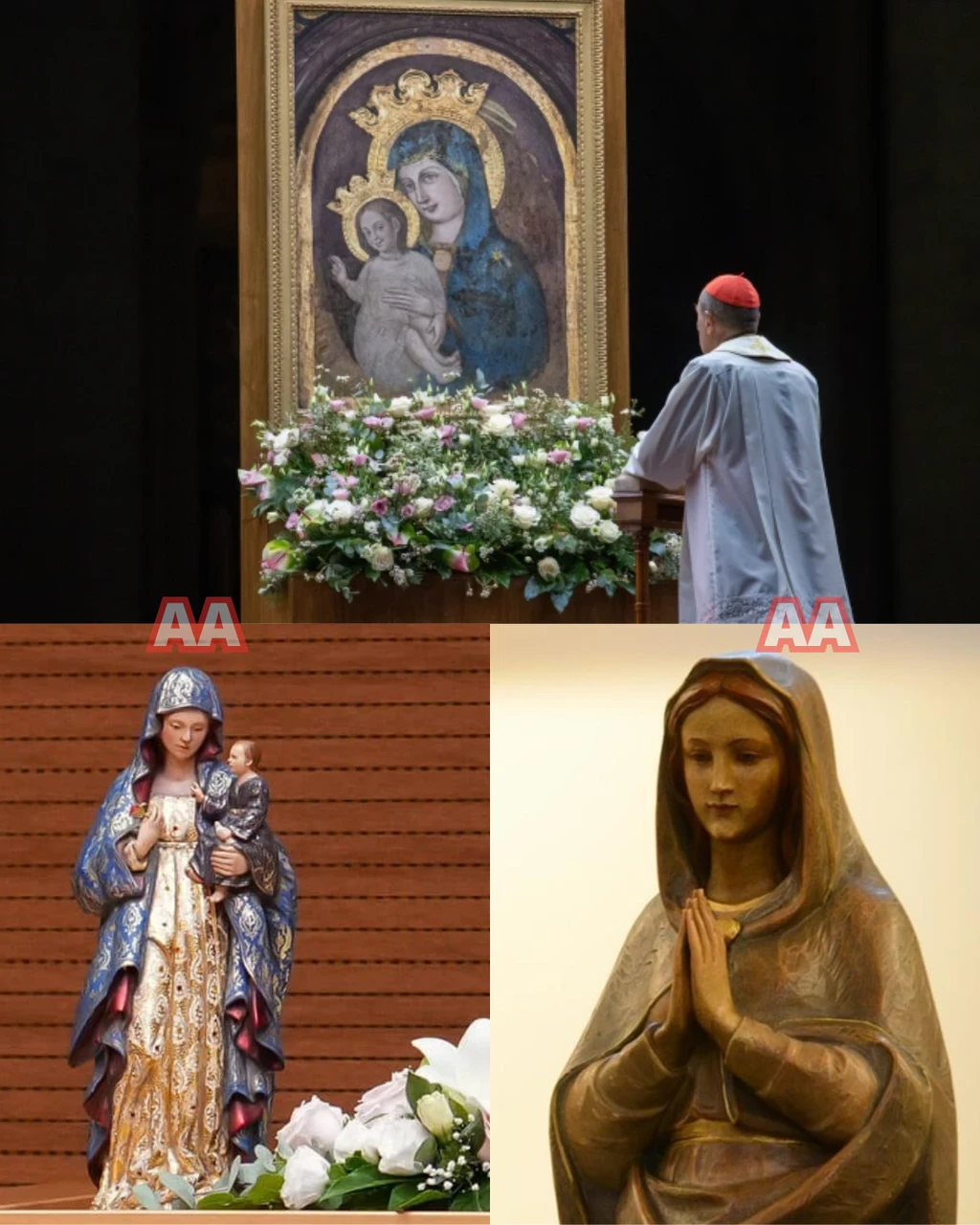
The Vatican’s doctrinal office said Tuesday the titles of “Co-Redemptrix” and “Mediatrix” are not appropriate ways to describe Mary’s participation in salvation.
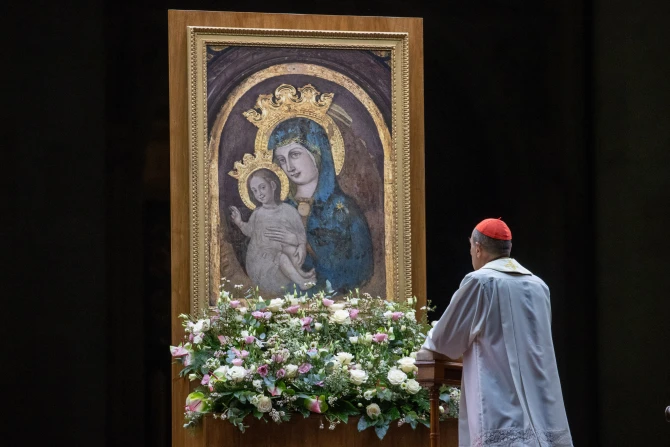
In Mater Populi Fidelis (“The Mother of the Faithful People of God”), the Dicastery for the Doctrine of the Faith (DDF) said when an expression requires frequent explanation to maintain the correct meaning, it becomes unhelpful.
“In this case, the expression ‘co-redemptrix’ does not help extol Mary as the first and foremost collaborator in the work of redemption and grace, for it carries the risk of eclipsing the exclusive role of Jesus Christ,” according to the doctrinal note, released Nov. 4.
Pope Leo XIV approved the document, signed by DDF prefect Cardinal Víctor Manuel Fernández, on Oct. 7.
Mary’s contribution to human salvation, specifically the title of “Co-Redemptrix” (“Co-Redeemer”), has been a point of theological debate for decades, with proponents calling for Mary’s role in redemption to be declared a dogma but critics saying it exaggerates her importance and could damage efforts for unity with other Christian denominations.
In a preface to the note, Fernández wrote that the document responds to questions the dicastery received in recent decades about Marian devotion and certain Marian titles, and clarifies which are acceptable.
“There are some Marian reflection groups, publications, new devotions, and even requests for Marian dogmas that do not share the same characteristics as popular devotion,” the cardinal wrote, adding that some Marian devotions, expressed “intensely through social media,” can sow confusion among Catholics.
“This text also aims to deepen the proper foundations of Marian devotion by specifying Mary’s place in her relationship with believers in light of the mystery of Christ as the sole mediator and redeemer.
This entails a profound fidelity to Catholic identity while also requiring a particular ecumenical effort,” Fernández wrote.
In addition to “Co-Redemptrix,” the document also addressed at length the Marian title “Mediatrix” or “Mediatrix of All Graces,” analyzing related Church teaching on Mary’s role as intercessor.
The DDF concluded that “some titles, such as ‘Mediatrix of All Graces,’ have limits that do not favor a correct understanding of Mary’s unique place.”
The dicastery encouraged the use of other expressions for Mary, specifically titles referring to her motherhood, including “Mother of God” and “Mother of the Faithful People of God.”
“She is the mother who gave the world the author of redemption and of grace, who stood firm at the foot of the cross (cf. John 19:25), suffering alongside her son and offering the pain of her maternal heart pierced by the sword (cf. Luke 2:35),” the document said.
“From the Incarnation to the cross and the Resurrection, she was united to Christ in a way that is unique and that far surpasses any other believer.”
Emphasizing that Mary was saved by her son, Jesus Christ, “in a particular and anticipatory way,” the document explained that “Mary’s incomparable greatness lies in what she has received and in her trusting readiness to allow herself to be overtaken by the Spirit.”
It warned that “when we strive to attribute active roles to her that are parallel to those of Christ, we move away from the incomparable beauty that is uniquely hers.”
Presentation in Rome
Experts on Mariology have have held different positions on the title “Co-Redemptrix,” as have different popes.
At a presentation at the Jesuit Curia in Rome on Nov. 4, Fernández emphasized Pope Leo XIV’s support for the doctrinal note but said “there is no doubt that this document will not please some people.”
He explained that note was intended to help Catholics avoid either exaggerating or underrating the importance of devotion to Mary.
“We care for the people’s faith without complicating it with issues that are not among the concerns of the vast majority and that add nothing essential to their love for Mary,” he added.
He also called debates online defending Mary as “Co-Redemptrix” evidence of the “maximalism” the dicastery wants to avoid.
The cardinal’s approximately 40-minute speech was interrupted on several occasions, including in response to this claim, by an Italian man who called himself Gianfilippo (he declined to give his last name to reporters after the event).
The man, who claimed to be part of a Marian study group of about 30 people, appeared to object to some of Fernández’s arguments, shouting that the document “does not please God” and the title of Mary as “Co-Redemptrix” is “is God’s eternal truth … which the Church has approved for centuries.”
“You must also listen to the laity,” the man claimed in a raised voice. “Documents cannot be made like this without listening to the people.”
“You are not the people,” the cardinal answered. “If you want to write, write to the dicastery.”
Fernández added that the dicastery would listen to his position with respect, “but it’s not the only one. I recommend [you read] the document.”

News
“MELONI SI COMMUOVE DOPO BELPIETRO: IL CASO ZUNCHEDDU RIAPRE LA GUERRA SULLA GIUSTIZIA—GARANZIE O VENDETTA POLITICA? TRA TOGHE, GOVERNO E OPINIONE PUBBLICA, UNA STORIA DI INNOCENZA DIVENTA ARMA ELETTORALE È un frame che resta addosso: Maurizio Belpietro alza il tono, parla di Beniamino Zuncheddu e dell’ingiusta detenzione che ha sconvolto l’Italia, e Giorgia Meloni—secondo quanto riportato—si dice “molto colpita”, fino a lasciar trapelare emozione. Il tema, però, non è solo umano: è dinamite istituzionale. Perché il caso Zuncheddu diventa subito il simbolo di una battaglia più grande: riforma della giustizia, carcerazione preventiva, responsabilità, fiducia nello Stato. C’è chi vede un dovere morale di cambiare le regole; c’è chi teme una narrazione usata per mettere all’angolo la magistratura. Retroscena: secondo indiscrezioni, a quanto risulta dopo l’intervento sarebbe partita una raffica di telefonate tra staff e parlamentari per trasformare lo choc in agenda—senza prove, ma con una sensazione netta: qualcuno vuole che questa storia diventi “la prova” definitiva. Parole chiave: Meloni, Belpietro, caso Zuncheddu, giustizia, riforma.
Trentatré anni. Da innocente. Una frase che non ha bisogno di aggettivi. Che non ha bisogno di commenti. Che cade nell’aula come una pietra in un pozzo — e il rumore che fa, rimbalzando sulle pareti, è il rumore di…
“PORRO INTERVISTA MELONI SULLA RIFORMA DELLA GIUSTIZIA: “SEPARAZIONE DELLE CARRIERE” O CONTROLLO DEL POTERE? IN TV SI APRE UNA FRATTURA TRA TOGHE, GOVERNO E OPPOSIZIONI—E QUALCUNO PARLA DI UNA NOTTE DI TELEFONATE NERVOSISSIME Studio lucido, domande secche: Nicola Porro incalza Giorgia Meloni a Quarta Repubblica e il tema diventa subito esplosivo—riforma della giustizia, referendum, e soprattutto la “separazione delle carriere”. Meloni la presenta come svolta di garanzia e chiarezza istituzionale; i critici la leggono come terreno scivoloso, dove la fiducia nello Stato rischia di dividersi in due tifoserie. Il punto caldo è il non detto: cambiano gli equilibri tra magistratura e politica, o cambia solo la narrativa? Secondo indiscrezioni, a quanto risulta sarebbe circolata una scaletta “blindata” e, nella notte prima, ci sarebbe stata una chiamata tra staff per evitare “trappole” su CSM e tempi della riforma—nulla di provato, ma l’atmosfera lo suggerisce. Parole chiave: Porro, Meloni, giustizia, separazione delle carriere, referendum.
“Ci state togliendo un potere di condizionamento al quale non vogliamo rinunciare.” Una frase pronunciata da Giorgia Meloni con la calma di chi ha già vinto l’argomento prima ancora di finire la frase. Con la precisione di chi sa che…
“DEL DEBBIO ACCENDE LA SALA E MELONI SI COMMUOVE: APPLAUSI, SILENZI E UNA FRASE CHE DIVIDE L’ITALIA TRA “POPOLO” E “PROPAGANDA”—IN DIRETTA (O QUASI) IL CONFINE TRA TV E POTERE SI FA PERICOLOSAMENTE SOTTILE È una scena da cinema politico: Paolo Del Debbio prende il microfono, la platea esplode, e Giorgia Meloni—secondo le immagini circolate—si sarebbe commossa. Non è solo un momento emotivo: è un test di forza sul racconto pubblico, dove ogni parola pesa come un voto. Da una parte c’è chi legge l’intervento come “voce del Paese”, dall’altra chi parla di spettacolarizzazione e di giornalismo troppo vicino al potere (critiche che rimbalzano anche sui social). Il punto non detto, ma centrale: chi sta guidando la conversazione—la politica o la televisione? Secondo indiscrezioni, a quanto risulta lo staff avrebbe curato tempi e inquadrature per evitare domande “a imboscata” e massimizzare l’impatto emotivo, senza che questo provi nulla oltre la strategia comunicativa. Parole chiave: Del Debbio, Meloni, Dritto e Rovescio, Mediaset, platea.
“L’imparzialità non è una questione inventata dalla giurisprudenza. È una questione che attiene la nostra natura.” Una frase pronunciata sotto le luci di uno studio televisivo. Con una platea che esplodeva. Con la telecamera che cercava il volto della premier…
“FEDEZ “APRE LE PORTE” A MELONI: IL PULP PODCAST DIVENTA CAMPO DI BATTAGLIA TRA POTERE E POP—REFERENDUM, POLITICA ESTERA E ASSENZE PESANTI (SCHLEIN, CONTE): CHI PARLA AL PAESE E CHI RESTA FUORI DALLA STANZA? Telecamera fissa, tono da confessionale, ma la posta è politica. Giorgia Meloni è ospite del Pulp Podcast di Fedez: un incontro che mescola linguaggio pop e Palazzo, con domande su referendum e scelte di governo, fino al nodo della politica estera e del rapporto con gli USA—tema che, secondo le anticipazioni, arriva sul tavolo senza filtri. Nel retroscena più rumoroso non c’è solo ciò che la premier dice, ma chi non c’è: viene riportato che Elly Schlein avrebbe declinato l’invito e che da Giuseppe Conte non sarebbe arrivata risposta. E così l’intervista diventa uno specchio: dialogo diretto con un pubblico nuovo o operazione di immagine? A quanto risulta, la strategia è semplice e feroce: portare la battaglia culturale fuori dai talk show, dove un rapper può fare le domande che l’Aula evita. Parole chiave: Fedez, Meloni, Pulp Podcast, referendum, politica estera.
“Non si vota sulla Meloni. Si vota sulla giustizia.” Una frase pronunciata in uno studio che non assomiglia a nessuna sala stampa di Palazzo Chigi. Nessun podio istituzionale. Nessuna bandiera italiana sullo sfondo. Solo una telecamera fissa, due microfoni, e…
“MATONE “INARRESTABILE” CONTRO SCHLEIN: IN AULA VOLANO ACCUSE SULLA GIUSTIZIA, E DIETRO LE QUINTE SI APRE UNA GUERRA DI FIDUCIA TRA TOGHE, GOVERNO E PD—CHI DIFENDE I VALORI DELLO STATO E CHI RISCHIA DI PERDERLI? Luci fredde, microfoni accesi: Simonetta Matone alza il tiro e punta dritto su Elly Schlein. Il bersaglio è la riforma della giustizia—e soprattutto la frase-chiave che incendia tutto: “PM sotto l’esecutivo?”. Matone parla di “affermazioni gravissime” e sfida l’opposizione a indicare dove, nei testi e nelle intenzioni, starebbe questo rischio. La tensione cresce, i banchi rumoreggiano, e la Camera diventa un ring di parole. Il conflitto centrale è chiaro: sicurezza istituzionale vs allarme democratico. Secondo indiscrezioni, a quanto risulta nei corridoi si starebbe già preparando la clip “definitiva” per i social, mentre nel PD qualcuno teme un boomerang comunicativo. E c’è un dettaglio che rimbalza sottovoce—una telefonata notturna tra staff, “tenete la linea, domani si va all-in”. Parole chiave: Matone, Schlein, giustizia, PM, Parlamento.
“Elly, per favore, mi indichi qual è il punto specifico delle norme nel quale è scritta questa cosa.” Una frase pronunciata con la calma di chi ha passato quarantuno anni in magistratura. Con la precisione di chi sa che la…
“LA RUSSA NELLA BUFERA: LO SCONTRO CON LA MAGISTRATURA DIVENTA GUERRA DI NARRAZIONI SUL REFERENDUM—TRA GRATTERI, NORDIO E OPPOSIZIONI, IL QUIRINALE DELLA FIDUCIA VACILLA: CHI DIFENDE LO STATO E CHI “FA PROPAGANDA”? A Roma basta una frase per far tremare i palazzi. Ignazio La Russa finisce al centro della tempesta dopo l’ennesimo botta e risposta sulla giustizia: da un lato l’accusa che certi toni “offendano” e alzino lo scontro con la magistratura, dall’altro la replica che la destra “non è mangia-magistrati”. Intanto Nordio rilancia il tema delle riforme e la discussione si incolla al referendum sulla separazione delle carriere. L’opposizione (Pd in testa) denuncia una “scelta politica” e chiede di abbassare i toni: è qui che nasce la frattura centrale—riforma o delegittimazione? Secondo indiscrezioni, a quanto risulta circolerebbero appunti riservati e una telefonata notturna tra staff per “blindare la linea” prima dell’Aula. Nulla di provato, ma il sospetto avvelena l’aria. Parole chiave: La Russa, magistratura, Nordio, Gratteri, separazione delle carriere.
Mentre lei chiudeva gli scatoloni nel suo ufficio dell’Aquila, sorvegliata da agenti armati, i portoni dorati di Palazzo Madama si aprivano per qualcun altro. Non per lei. Non per il giudice che aveva applicato la legge. Non per la magistrata…
End of content
No more pages to load